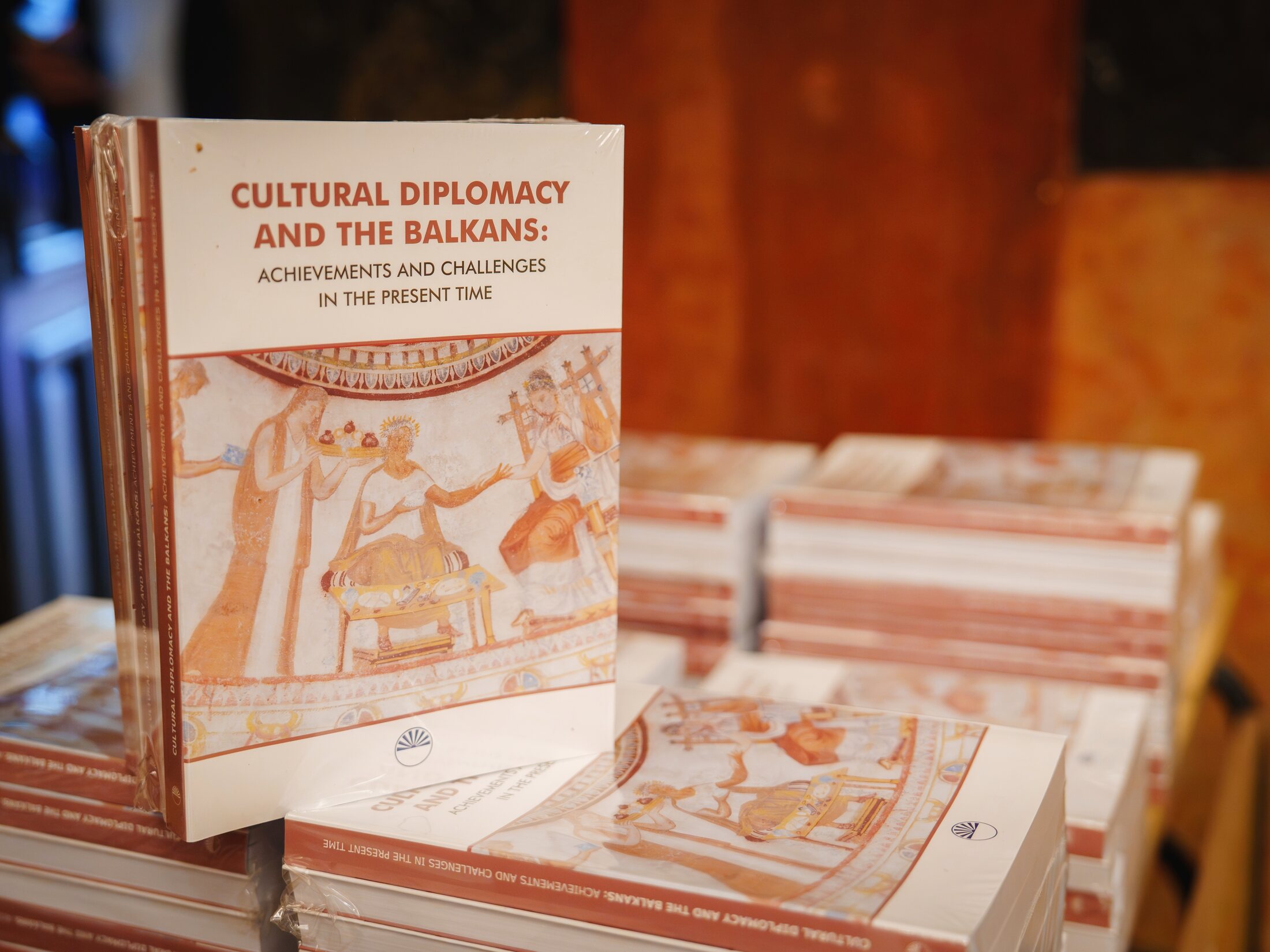
Cultural Diplomacy in the Balkans in the 20th and 21st Centuries
A project by the Institute of Balkan Studies and Centre of Thracology at the Bulgarian Academy of Sciences, funded by the Scientific Research Fund
A project by the Institute of Balkan Studies and Centre of Thracology at the Bulgarian Academy of Sciences, funded by the Scientific Research Fund
Open-access texts from the academic collection, available for download as PDFs, exploring the topics of cultural diplomacy and cultural policies
Thematic forum and meetings with ambassadors, organised as part of the project
Irina Bokova
Foreword to the edited volume “Cultural Diplomacy and the Balkans: Achievements and Challenges in the Present Time”
Assist. Prof. Alexandra Milanova, PhD
Introduction to the edited volume “Cultural Diplomacy and the Balkans: Achievements and Challenges in the Present Time”
Assoc. Prof. Albena Taneva, PhD
Abstract: The development of any society implies a continuous process of renewal, a balance along the vector of domestic policy (security, culture, knowledge and prosperity), but also along the vector of foreign policy and the situation in the external environment. The axiomatic importance of peace in order to achieve any social goal implies opportunities for its preservation. Cultural diplomacy is an instrument of peace, understanding and prosperity. The very concept of cultural diplomacy contains the prerequisites for agreement. The mission of diplomacy is to find solutions without – and regardless of – the presence of force and coercion. In every definition, culture implies a value base and integrity. Linking culture with diplomacy is one of the most goal-oriented, convincing and sustainable ways to achieve results in any area of public policy. This chapter conceptualizes cultural diplomacy as an independent reality, which creates prerequisites for understanding and sustainability in the international environment, but also acts as a tool catalysing cooperation, overcoming faults and prejudices, and creating prerequisites for social cohesion. This analysis uses a conceptual exhibition as a case study to explore cultural diplomacy as a policy tool, focusing on a specific historic al episode involving the fate of Jews in Bulgaria during the Holocaust and its role in contemporary memory policies. The conclusions highlight the potential of cultural diplomacy to foster dialogue and understanding on complex historical issues and contentious present-day policies. Keywords: Cultural Diplomacy, Public Policies, Memory Policies
5 October 2026
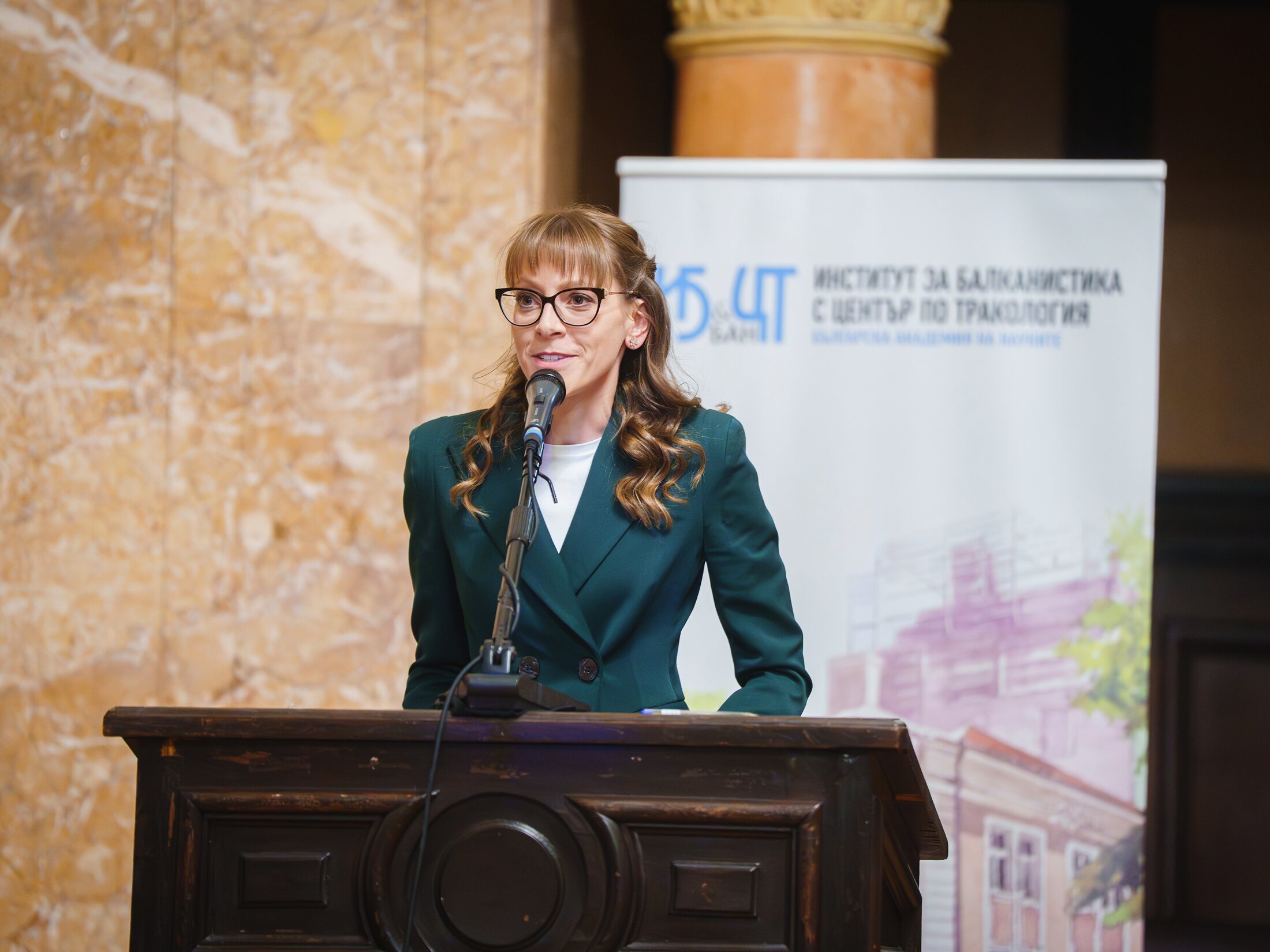
The project leader, Assist. Prof. Dr. Alexandra Milanova, took part in the International Forums on Cultural Diplomacy in the USA & the UN. She presented a paper entitled "Contested (hi)stories, shared futures: Advancing cultural diplomacy in the Balkans through the United Nations." The event, organized by the Institute for Cultural Diplomacy, took place from 5 to 8 October 2026 at the US Congress in Washington, D.C., and at UN Headquarters in New York. The Forum brought together diplomats, senators, members of Congress, representatives of the UN and UNESCO, scholars and university professors, as well as experts in cultural diplomacy and international cooperation from around the world, united by the understanding that culture is an effective means of building trust, preventing conflicts, and promoting understanding and cooperation.
19 March 2026
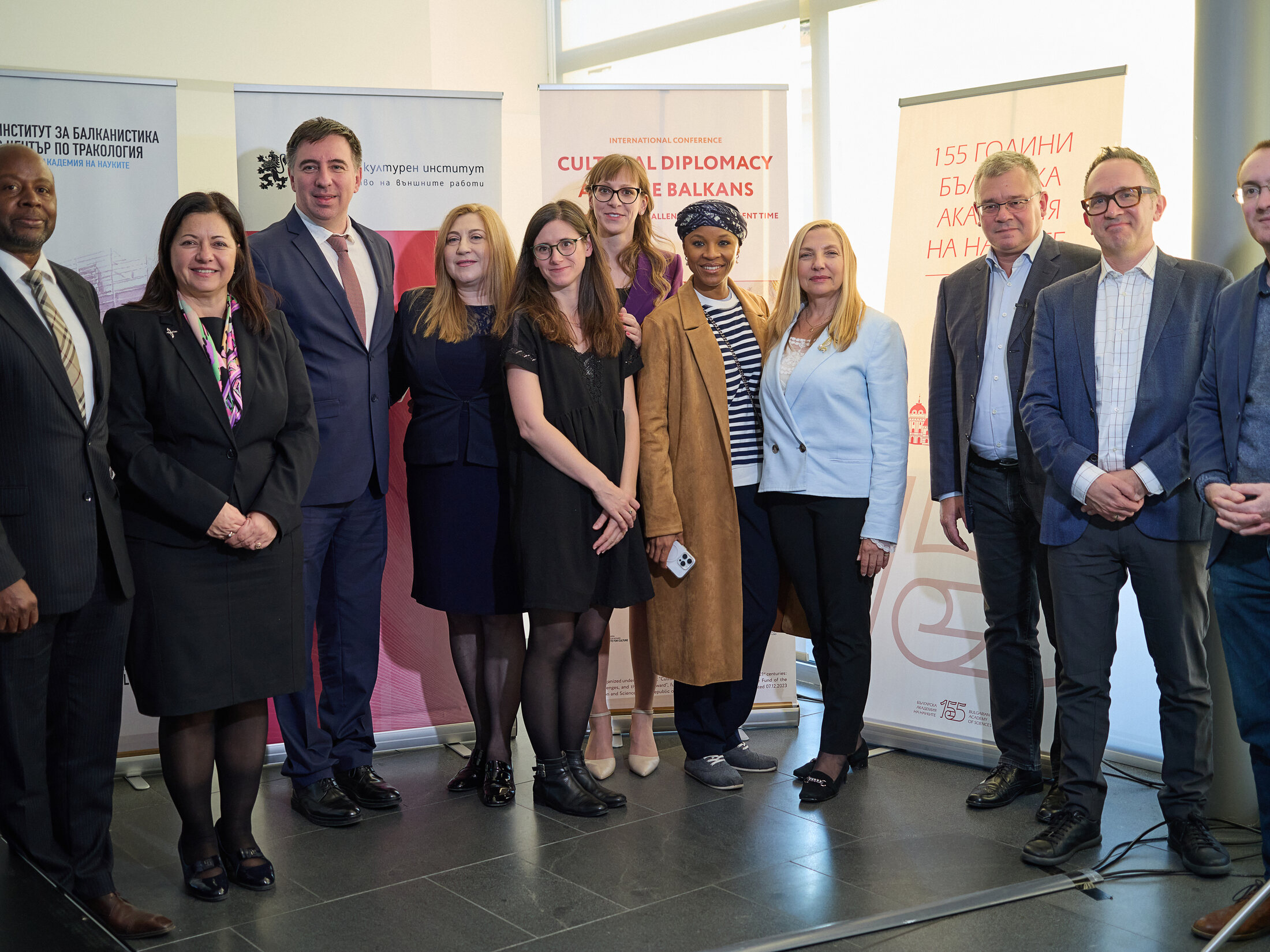
On 19 March 2026, the Institute of Balkan Studies & Centre for Thracology at the Bulgarian Academy of Sciences presented the volume “Cultural Diplomacy and the Balkans: Achievements and challenges in the present time” (ed. Alexandra Milanova, BAS Publishing House “Prof. Marin Drinov”, 2025) at the Aula of Sofia University “St. Kliment Ohridski”. The book is the outcome of the project “Cultural Diplomacy in the Balkans in the 20th and 21st Centuries: Achievements, Challenges, and the Way Forward”, funded by the Bulgarian National Science Fund of the Ministry of Education and Science. The volume was presented by the prominent diplomat and public figure Stefan Tafrov, while the event was moderated by Irina Nedeva, journalist at the Bulgarian National Radio. The event was attended by representatives of institutions involved in the development and implementation of cultural policies, members of the diplomatic corps, scholars, academics, and students. Mr Yavor Koynakov, Acting Director of the State Institute for Culture to the Minister of Foreign Affairs, delivered greetings on behalf of Ms Nadezhda Neynski, Minister of Foreign Affairs of the Republic of Bulgaria. Minister of Culture Nayden Todorov also expressed his appreciation for the efforts of the project team and the contributors to the volume. Special guests included Ms Milena Dimitrova, Secretary to the President for Education, Science and Culture; Dr Plamena Zayachka, Adviser to the Minister of Tourism; Ms Maria Todorova-Simova, Director General of the Inspectorate for the Protection of Cultural Heritage at the Ministry of Culture; Ms Tanya Mihaylova, Director of the Diplomatic Institute; and Prof. Dr Reneta Bozhankova, Vice-Rector for International Affairs at Sofia University, among others. The event served as a forum for bringing together experts and practitioners in the field of cultural diplomacy, foregrounding scholarly and interinstitutional dialogue on issues related to culture.
20 October 2025
On October 20, 2025, a public lecture-discussion on the topic “Germany in Dialogue: Cultural Exchange in a European Context” was held at the Institute of Balkan Studies & Centre of Thracology at the Bulgarian Academy of Sciences (IBSCT-BAS). It is part of the series of events dedicated to cultural diplomacy in the Balkans, organized by the IBSCT-BAS in institutional partnership with the State Institute for Culture to the Minister of Foreign Affairs of the Republic of Bulgaria (DKI). The initiative is implemented under the Project “Cultural diplomacy in the Balkans in the 20th and 21st centuries: Achievements, challenges, and the way forward”, funded by the Bulgarian National Science Fund of the Ministry of Education and Science of the Republic of Bulgaria. The public lecture-discussion was opened by the Director of the IBSCT-BAS Prof. Dr. Roumiana Preshlenova and the Project Manager Assist. Prof. Dr. Alexandra Milanova, Scientific Coordinator of the IBSCT-BAS. Nia Tabakova welcomed those present on behalf of the director of the DKI Snezhana Yoveva-Dimitrova. Special guests and lecturers will be H.E. Irene Maria Plank, Ambassador of the Federal Republic of Germany to Bulgaria and Dr. Kirsten Hackenbroch, Director of Goethe-Institut Bulgaria. H.E. Irene Maria Plank spoke about the essence of cultural diplomacy in the contemporary world. Dr. Hackenbroch presented the diverse cultural activities of the Goethe-Institut in Bulgaria and Europe, as well as the successful initiatives within the framework of the European Union National Institutes for Culture (EUNIC). The event was attended by Assoc. Prof. Dr. Mariana Tien, Scientific Secretary of Department 9 "Man and Society", Mr. Yavor Koynakov, Chief Expert Coordination of International Cultural Projects at the DKI, Assoc. Prof. Dr. Albena Taneva, Head of the Department of Public Administration at the Faculty of Philosophy of Sofia University "St. Kliment Ohridski", Assoc. Prof. Dr. Boris Stoyanov from the Faculty of History of Sofia University, representatives of the cultural sector, scientists, lecturers, doctoral candidates and students.
Българска национална телевизия • 13 April 2026
Българска национална телевизия • 11 April 2026
Българско национално радио • 30 March 2026
We can't find the internet
Attempting to reconnect
Something went wrong!
Attempting to reconnect